
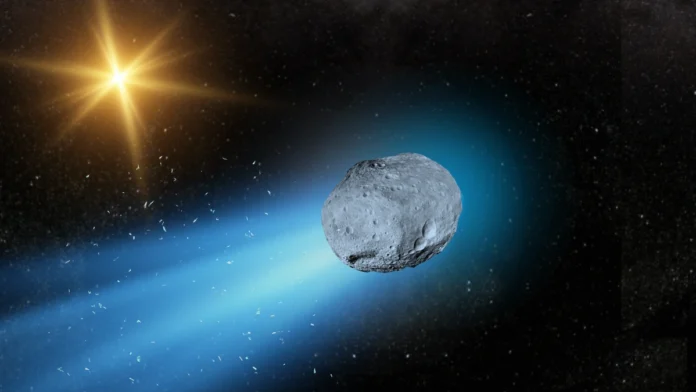
Ever felt like the universe is trying to tell you something? Well, it might be, and it’s arriving in the form of a comet! Get ready, folks, because 3I/ATLAS – a celestial wanderer – is making headlines, and it’s not just another pretty space rock. This one has scientists and stargazers alike buzzing. But why? What’s the big deal? And what does it mean for us, sitting here in India, looking up at the same sky?
The “Why” Behind the Buzz | More Than Just a Comet
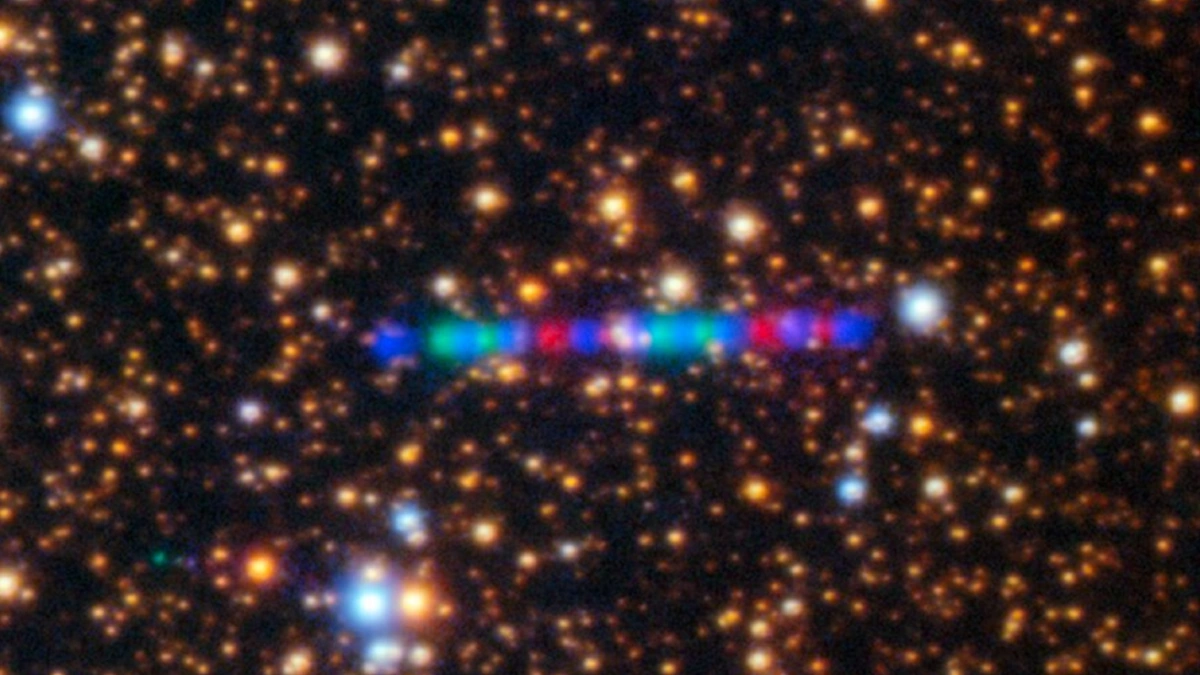
Let’s be honest, comets come and go. But, 3I/ATLAS Comet is different. It’s not just about the ice and dust; it’s about what this comet represents. Firstly, it belongs to a special class of comets called interstellar comets – meaning it originated from outside our solar system. Think about that for a second. This cosmic traveler has journeyed across the vast expanse of space to visit us. What fascinates me is the information it could hold about other star systems. It’s like receiving a postcard from a distant alien world. According to NASA’s website , studying interstellar objects can provide valuable clues about the formation and composition of planetary systems beyond our own.
Secondly, its discovery and behavior are providing insights into the ever-improving astronomical survey technology we now possess. The ATLAS system detected it, and observations continue to refine our models of cometary behavior.
Decoding the Name | 3I/ATLAS Explained
Okay, let’s break down that somewhat cryptic name. “3I” simply means it’s the third interstellar object ever discovered. The “I” designates its interstellar nature. And “ATLAS” refers to the Asteroid Terrestrial-impact Last Alert System, the network of telescopes that first spotted it. This system is designed to detect near-Earth objects that could pose a threat, but in this case, it snagged a fascinating interstellar visitor. A common mistake I see people make is assuming all comets are named after people. In this case, it’s named after the survey that found it.
Why Should India Care About an Interstellar Comet?
Now, you might be thinking, “Okay, cool comet. But I’m more worried about my chai getting cold.” Here’s the thing: Science is a global endeavor. The data collected from observing comets like 3I/ATLAS is shared worldwide. Indian astronomers and researchers use this data to contribute to our understanding of the universe. Moreover, it sparks curiosity and inspires the next generation of scientists and engineers right here in India. And let’s be honest – who doesn’t love a good space story?
Plus, with increasing investment in space exploration by ISRO and other Indian institutions, this reinforces the need for continued research and development in Astronomy and Astrophysics.
How to (Maybe) See It
Let’s be realistic. Spotting 3I/ATLAS with the naked eye from India is going to be tough, if not impossible. It is very faint, and current data suggests it may not become easily visible to the naked eye. However, if you have access to a telescope or even a good pair of binoculars, you might have a chance. Keep an eye on astronomy websites and forums for updated viewing charts. Remember, light pollution is a killer, so try to get away from city lights for the best chance.
A common mistake I see people make is thinking they can just step outside and see a comet like you see in the pictures. You absolutely must double-check viewing charts and have the right equipment.
But and even if you can’t see it directly, the fact that it’s there, hurtling through space, is pretty mind-blowing, right? As the research and observations continue, the data shared may one day be crucial in understanding other far off phenomena. Like dark matter!
What’s Next? The Future of Comet Hunting
The discovery of 3I/ATLAS underscores the importance of continued investment in astronomical surveys and technology. We’re getting better and better at finding these cosmic wanderers. And with each discovery, we learn more about the origins of our solar system and the potential for life beyond Earth. So, the next time you look up at the night sky, remember that there’s a whole universe of mysteries waiting to be uncovered. And who knows? Maybe the next big discovery will come from right here in India. Remember, the universe doesn’t care where you are, and at usatrendingtodays.com , we will keep you up to date.
FAQ About 3I/ATLAS
Will 3I/ATLAS hit Earth?
No, 3I/ATLAS poses absolutely no threat to Earth.
Can I see it with my naked eye?
Likely not. It’s faint, and requires a telescope or binoculars and dark skies.
Where does the name “3I/ATLAS” come from?
“3I” means it’s the third interstellar object discovered. ATLAS is the name of the telescope system that found it.
What are scientists hoping to learn from it?
Its composition and behavior could give us clues about other star systems and the formation of comets.
Are there other interstellar comets?
Yes, 1I/’Oumuamua and 2I/Borisov were the first two interstellar objects discovered.
Is this related to asteroid impacts?
Indirectly. The ATLAS system is designed to detect both asteroids and comets that could potentially impact Earth, though this one poses no threat.


